Technology innovation has been a key component in the evolution of investment management. It has delivered a more automated, data-driven, and transparent industry. Finance and technology are now interwoven, creating the new frontier of fintech. As the landscape becomes more complex and options proliferate, investment management technology has a significant role to play in all firms, whether large or small.
 Technology in investment management has been a driver of greater productivity and better outcomes. Leveraging it successfully gives firms a competitive advantage. Its value is undeniable, but what should companies know about investment technology, and how can they best optimize it?
The Effect of Technology on the Future of Investment Management
While technology in financial markets has existed for more than 50 years, the industry is at an inflection point. Many fund managers and their operations teams are making careful decisions about investment technology.
They are facing challenges, including dealing with legacy systems for portfolio management and trading, as well as increased maintenance costs and migration. Building a more robust and flexible tech stack will mean change. The best way forward is to adopt a cloud-based and data-ready architecture.
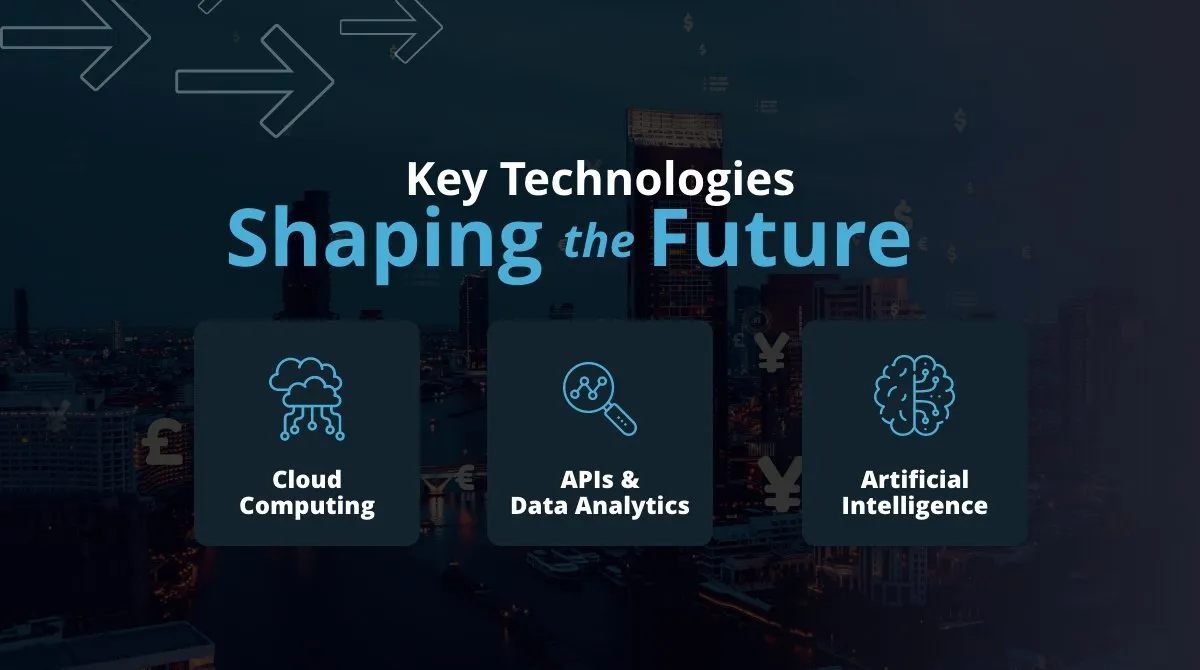
Three of the top disruptive components fueling the future of investment management technology are the cloud, data analytics powered by application programming interfaces (APIs), and artificial intelligence (AI).
This trio represents emerging capabilities. Each offers possibilities for the future of investment and asset management technology. The cloud can be a secure, scalable, and flexible home for data. APIs connect disparate systems that contain crucial data, and AI drives the analysis and insights from this data.
The growth and ability of data also support the opportunity to shift technology frameworks. Evaluating data with algorithms to find patterns, trends, and insights enables stakeholders to make more informed decisions and identify signals around them that can reduce risk.
The platforms in place to usher in the impact of technology are growing. Global spending will reach $1.67 billion by 2030, with a compound annual growth rate (CAGR) of 5.09%.
The outcomes of implementing this robust investment manager technology represent tremendous value.
The Value of Investment Management Technology
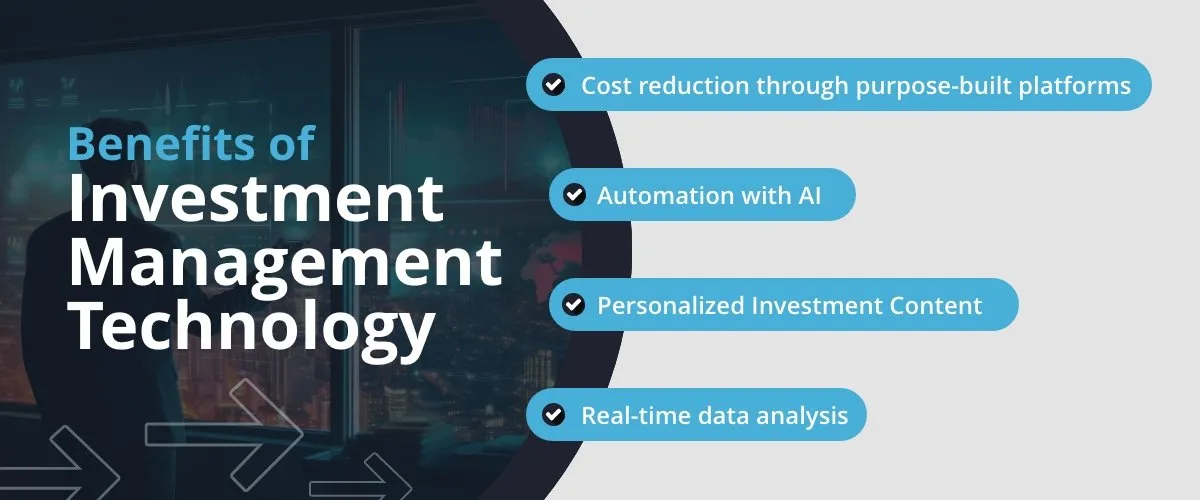
The value of technology in investment management is and will continue to transform the environment. The benefits include reduced costs, increased efficiency, greater personalization, and effectiveness.
Some of technology’s influences on investment management include these opportunities:
Tech costs decrease by adopting cloud-native platforms
A firm attempting to build its own investment and asset management technology is a considerable undertaking. Those on this path can expect to spend significantly on development, hosting, and more. Companies can reduce their tech budget using trusted, secure, and proven solutions. Doing so ensures tech costs are on their operating expenses, not capital expenditures.
Automation advancements drive efficiency
The progress on this currently is via robotic process automation (RPA), which includes digital “robots” that can take over rules-based, repetitive tasks. In the future, this will broaden, with AI added to these robots that can complete more complicated workflows requiring some decision-making. This will not eliminate the need for human intelligence but rather augment it.
Personalized investment recommendations are possible with AI
Based on data analysis on conditions and an investor’s risk profile, algorithms will be able to deliver more customized investment advice.
Real-time data analysis and proactive alerts lead to more effective processes
With investment manager technology, users can access this information to stay ahead of the competition. The alerts allow for guided user workflows to respond to situations at the priority necessary (e.g., immediate or future attention).
In looking at the possibilities of technology in investment management, industry professionals should also be aware of the upcoming trends.
Upcoming Investment Management Trends
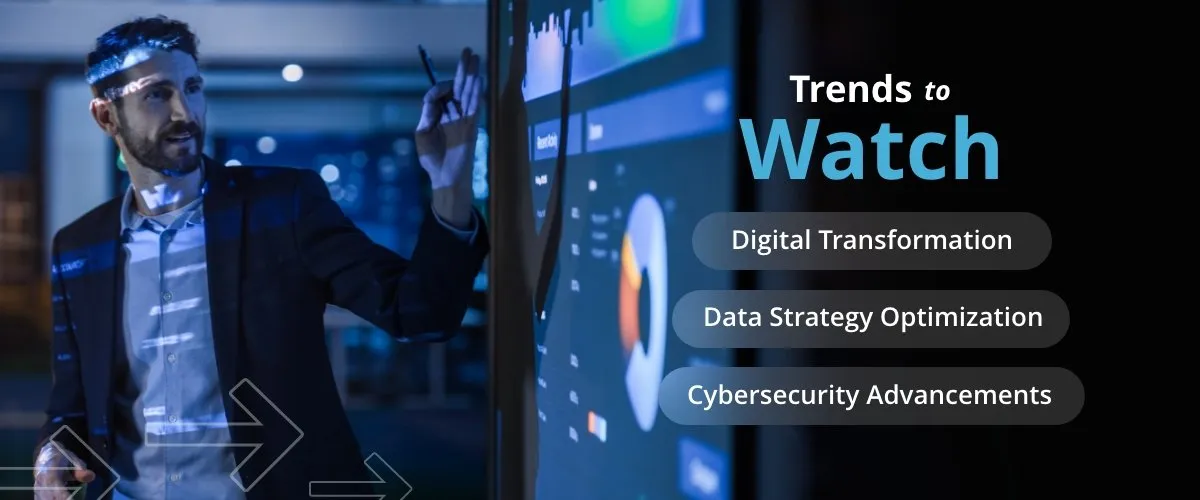
These trends will be critical for the future of investment management.
- Digital transformation remains a top priority: Investment firms have been on a digital transformation trajectory for some time. It accelerated after 2020 and continues on an upward trajectory. Technology becomes the key to delivering efficiency and effectiveness to achieve digital transformation goals. It will include decommissioning legacy systems and migrating that data to the cloud and new platforms. Doing so enables firms to run a lean tech stack that simplifies and streamlines.
- Rethinking data strategies: In many firms, the barriers around actionable data involve silos and quality issues. Disconnected data must be aggregated to enable better decision-making. It also needs a quality check to determine if it’s accurate and relevant. To achieve this, companies will need to define standards and governance around data for it to be useful.
- The need to be agile as risk and volatility persist: Any investment firm needs flexibility, as many things impact its business. Economic uncertainty, inflation, geopolitical instability, and other factors continue to alter outlooks. It’s another reason why investment technology software is so critical. With it, managers can be proactive, not reactive.
- Cybersecurity remains a threat in the financial space: Any organization in this sector is attractive to cybercriminals. In 2024, two-thirds of financial institutions faced cyberattacks. Hackers are opportunistic and have advanced techniques to breach systems. To combat this, organizations need a robust cybersecurity program that includes vulnerability assessments, intrusion protection systems, and regular penetration testing. Investment management software should have security and compliance interwoven into its foundation, as well.
Navigating these trends is possible by transforming with technology.
Transforming Firms With Asset Management Technology
Feature-rich, intuitive, and cloud-based technology in asset management provides all the tools firms need to be future-ready. INDATA’s SaaS-based solutions cover the entire lifecycle of investment management. With practical AI infused into the platforms, organizations can experience greater performance and efficiency.
This secure and reliable investment management technology solution supports firms with customized configurations and the ability to scale as needed.
Explore INDATA’s innovations. Get started today by scheduling a personalized demo.
FAQs
How can firms use technology to manage investments?
A tech stack for modern investment management firms has many applications. It’s essential for front-middle-back office. There are solutions for trade order and execution, management, compliance, and more.
How is artificial intelligence transforming investment management?
AI has revolutionized investment management technology in many ways, including automating workflows, aggregating and analyzing data in real-time, identifying trends, portfolio modeling, and optimizing performance.
What are the benefits of cloud computing in asset management?
The cloud provides many advantages for firms. First, it can scale as the organization grows without concerns for reliability. Second, the cloud has layers of cybersecurity protections. Third, it removes the need for companies to have on-premises servers, reducing costs.
How do APIs contribute to investment management technology?
APIs are scripts that connect different platforms, so they can share data or streamline workflows.
What is the role of data analytics in investment decision-making?
Data has become a valuable part of investment management. The sheer amount is astounding, which means technology needs to support its analysis. AI has become a key component of this. When managers have access to current, accurate data with analysis, they can make better decisions, leading to greater performance.
What are the emerging trends in investment management technology?
Many firms remain committed to digital transformation, which means migrating from legacy systems to new ones. Additionally, risk and volatility remain and have become more complex, which requires greater agility. Cybersecurity has become an even greater risk, as well.